Most people do not think about their electrical panel until something starts acting weird. A breaker trips every time the microwave and toaster run together. Lights dim when the air conditioner kicks on. A new hot tub, EV charger, welder, or commercial machine is on the wish list, but nobody is sure the building can handle it.
That is usually the moment the electrical panel stops being a metal box on the wall and becomes a real decision.
An electrical panel upgrade is not about chasing a nicer-looking panel. It is about capacity, safety, and reliability. If you are adding large appliances or equipment, or if your building still has an older service, an upgrade may be the difference between a system that works smoothly and one that keeps warning you it is overloaded.
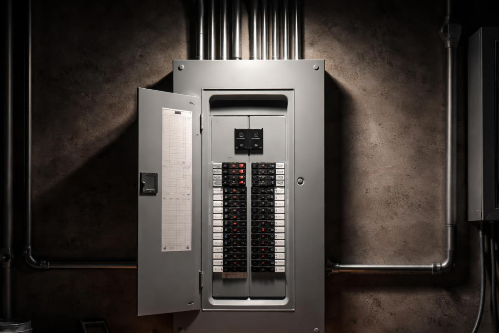
The panel is the control center for your building’s electrical system. Power comes in from the utility, passes through the service equipment, and is distributed to branch circuits throughout the property. Breakers inside the panel are there to protect those circuits. When too much current flows, the breaker trips to reduce the risk of overheating and fire.
That sounds simple, but a lot rides on it.
Your panel has two big jobs:
If the panel is undersized, outdated, damaged, or already full, the rest of your electrical system has a hard ceiling. You can only add so much before the system starts complaining.
People often use these terms interchangeably. Sometimes that is fine. Sometimes it creates confusion.
A panel upgrade usually means replacing the breaker panel with a newer one, often with more spaces or updated breakers.
A service upgrade usually means increasing the amount of electrical capacity coming into the building, for example moving from 100-amp service to 200-amp service. That can involve the panel, meter base, service entrance conductors, grounding, and coordination with the utility.
In plain English: you can replace a bad or outdated panel without changing the overall service size, but if your building needs more power, the job is bigger than just swapping a box.
A licensed electrician will usually look at both questions together:
Buildings are using more electricity than they did a generation ago. That is true in residential electrical work, and it is even more obvious in commercial electrical and industrial electrical settings.
Homes that once had a fridge, a stove, and a few small appliances now may have:
Commercial spaces have seen the same shift. Restaurants, retail stores, offices, and mixed-use buildings rely on more equipment, more data systems, more lighting control, and more HVAC demand than many older panels were designed to handle.
Industrial electrical services push this even further. Motors, process equipment, industrial transformers, high-voltage installations, voltage substations, and specialized machinery all require careful load planning. In those settings, undersized service is not just annoying. It can disrupt operations and damage equipment.
You do not need to wait for a complete failure. In fact, you should not.
Here are some common warning signs that a panel inspection is worth scheduling.
A breaker that trips once in a while may be doing its job. A breaker that trips all the time is telling you something. The cause might be a bad breaker, a circuit problem, or a load that exceeds what the circuit or panel can support.
If lights dip when larger equipment starts up, your system may be struggling with load changes. Sometimes the issue is on one circuit. Sometimes it points to a bigger panel or service problem.
This one is boring, but it matters. If there are no open breaker spaces, adding a new circuit for a range, EV charger, rooftop unit, or production equipment becomes harder and sometimes unsafe if someone tries to work around the limitation.
Fuse boxes were common in older buildings, but most properties today benefit from breaker panels. Fuses are not automatically unsafe just because they are old, but they are less convenient, often tied to older wiring systems, and can be misused if oversized fuses are installed.
Rust, scorch marks, melted insulation, buzzing, burning smells, or warm breakers are never “watch and wait” issues. Those are reasons to call an electrician quickly.
Renovations change loads. New kitchens, tenant improvements, shop expansions, or equipment additions often expose the limits of an older system.
Some older panel brands and outdated service setups can raise red flags for insurers or during inspections. If a panel has a history of reliability or safety issues, replacement is often the smart move even if the building “still works.”
Some upgrades are obvious. Some catch people off guard.
In homes, the usual triggers include:
In commercial electrical projects, common triggers include:
In industrial electrical services, triggers often include:
The pattern is simple: if the building will draw more power than before, the panel and service need to be checked before the equipment goes in.
This is the part people resist. I get it. If the lights come on and the breakers mostly stay put, it is tempting to assume everything is fine.
But electrical systems can function and still be wrong.
A panel may have loose connections, corrosion, poor grounding, double-tapped breakers, obsolete components, or hidden overload issues. None of those problems send polite calendar invites. They sit there quietly until demand spikes or a fault happens.
A proper inspection is not about selling panic. It is about confirming whether the system matches the building’s actual needs.
When a licensed electrician evaluates whether you need a panel or service upgrade, the process is more than a glance at the breaker labels.
A solid inspection often includes:
This is the backbone of the decision. The electrician calculates how much power the building is likely to use, based on square footage, fixed appliances, HVAC, equipment loads, receptacles, lighting, and special systems. For commercial electrical and industrial electrical work, the calculation may also consider demand factors, motor loads, startup current, and future expansion.
The electrician checks for:
The rating of the incoming service matters. A 200-amp panel does not help much if the service conductors or meter setup are still sized for less.
A safe electrical system depends on proper grounding and bonding. During an upgrade, these parts are often corrected or brought up to current code requirements.
Older wiring does not always mean immediate replacement, but the panel cannot be evaluated in isolation. Wiring, terminations, and circuit layout matter too.
The exact scope varies, but a typical electrical panel upgrade may involve:
A full service upgrade can also include:
Power usually needs to be shut off during part of the work. Good planning matters, especially for businesses, medical spaces, refrigerated operations, or industrial sites where downtime is expensive.
This is where broad advice falls apart a bit.
For homes, the focus is usually on safe capacity for modern living. A 100-amp service might still be enough for some smaller homes, but once EV charging, electric heating, additions, or major kitchen upgrades enter the picture, 200-amp service often becomes the practical target. Some larger homes need more.
Commercial properties often deal with tenant turnover, code changes, equipment changes, and expanding lighting or HVAC demands. Panel capacity becomes a business continuity issue. If the panel is full, every change order becomes harder. If the service is undersized, equipment choices become limited.
Industrial electrician work is a different animal. Load profiles can be more complex, and startup current for large motors or process equipment can reshape the whole design. In industrial electrician Vancouver style projects, or any market with older mixed-use industrial stock, upgrades often involve distribution gear beyond a standard breaker panel. That can include feeders, switchgear, industrial transformers, and high-voltage installations.
A few myths come up over and over.
Usually not. Installing a larger breaker on a circuit that is not designed for it can overheat wiring. The breaker is matched to the wire size and circuit design for a reason.
Maybe. Maybe not. Electrical systems are cumulative. One new appliance may be fine. One new appliance plus an EV charger plus a heat pump is a different story.
Not always. If the issue is faulty wiring, damaged devices, or utility-side voltage problems, a new panel alone may not fix it.
Age is not the only factor, but it matters. Some older panels and service components are simply less reliable or no longer a good fit for modern loads.
If you are talking to an electrician, these questions help:
You do not need to become an electrical engineer overnight. You just want a clear explanation of what is necessary now and what is wise for the next few years.
Electrical work is one of those areas where shortcuts can sit hidden for a long time and then matter all at once.
Permits and inspections help verify that the upgrade meets code. Hiring licensed electricians matters because service equipment work is not basic DIY territory. The risk is too high, and mistakes can affect the whole building.
This matters for homes. It matters even more for commercial electrical services and industrial electrical services, where insurance, occupancy requirements, operational safety, and equipment protection are all in play.
If you are comparing estimates, make sure you are comparing the same scope. One quote may include permit handling, grounding corrections, utility coordination, surge protection, and full labeling. Another may not. A cheap number can get expensive fast when the missing pieces show up later.
If you are not sure whether you need an electrical panel upgrade, use this simple filter.
You probably need an inspection soon if:
You may need an upgrade, not just an inspection, if:
A panel upgrade is not a cosmetic project. It is infrastructure. If your home, shop, office, or industrial space is taking on more electrical demand, the panel and service need to keep up.
The good news is that the logic is usually straightforward once someone does the math and looks at the equipment. Either the system can safely support your plans, or it cannot. Guessing is where people get into trouble.
If your breakers are sending warnings, your panel is outdated, or you are planning new large loads, get it inspected before the installation starts. That one step can prevent nuisance outages, equipment damage, failed inspections, and some genuinely dangerous problems.
Electricity is incredibly useful. It is also unforgiving when a system is undersized or ignored. A careful inspection now is a lot easier than dealing with the consequences later.