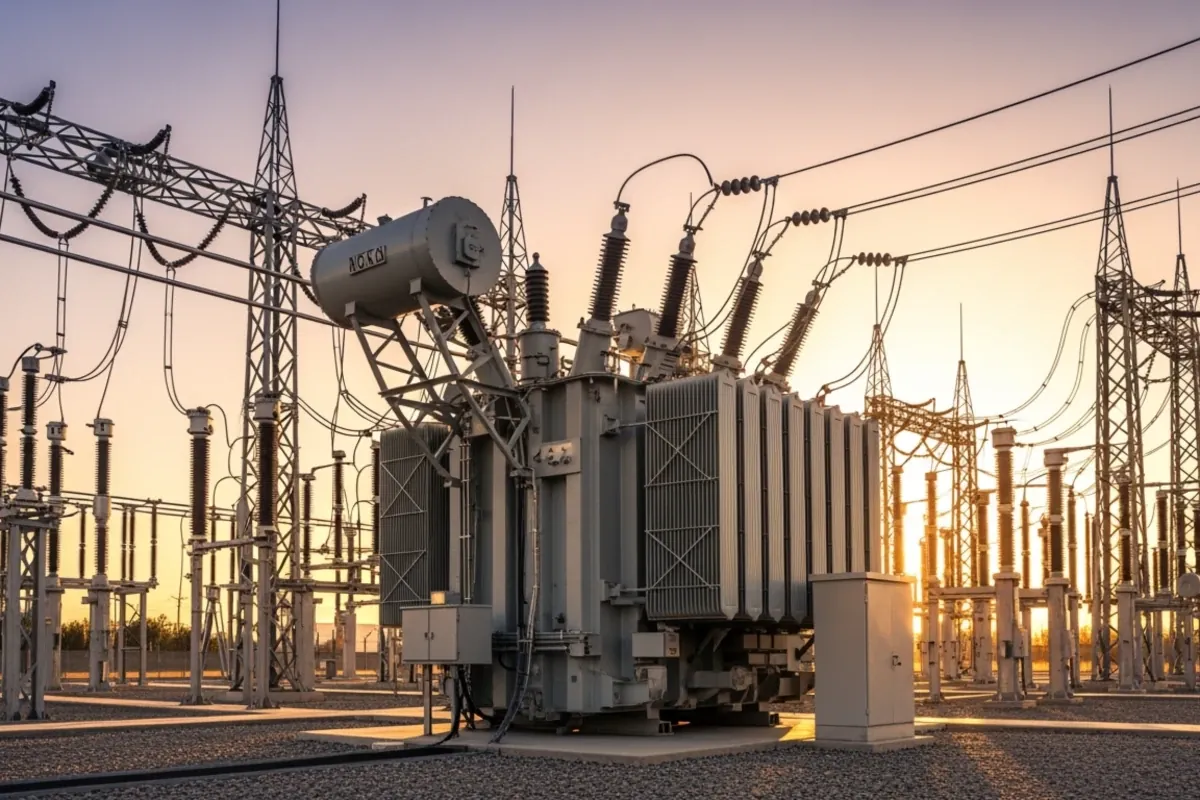
Most people only notice substations when they pass a fenced yard full of steel frames, transformers, and warning signs. Fair enough. They look intimidating, and they should. A voltage substation handles serious electrical power, and it plays a quiet but essential role in how electricity moves from generation to the places where people live and work.
If you run a business, manage a building, operate an industrial site, or own a larger property, understanding substations is useful. You do not need to become an engineer. But it helps to know what a substation does, why voltage levels matter, what can go wrong, and why this work belongs in the hands of licensed electricians and utility-qualified professionals.
At its simplest, a substation changes, controls, and protects electrical power.
Electricity is generated and transmitted at high voltages because moving power over long distances at higher voltage is more efficient. Before that electricity can be used in a factory, office building, shopping center, farm, or residential neighborhood, the voltage often needs to be reduced and routed safely. That is where a substation comes in.
A substation can:
That sounds technical, because it is. But the basic idea is simple: substations are control points in the electrical system. Without them, transmission and distribution would be far less safe and far less reliable.
People use these terms a lot, and the exact ranges can vary by jurisdiction, utility, and industry standard. In many practical settings, medium voltage is roughly 1 kV to 35 kV, while high voltage is above that. Utilities may use different classifications for transmission equipment, and engineers get very specific about definitions. For everyday planning, the bigger point is this: both categories involve enough energy to demand strict design, installation, and maintenance standards.
Medium-voltage systems are common in commercial electrical and industrial electrical settings. You will find them feeding larger buildings, campuses, manufacturing plants, pumping stations, and data-heavy facilities. High-voltage systems usually appear more often on the transmission side or in large industrial sites with major power demands.
The jump from standard residential electrical work to medium- or high-voltage installations is not small. It is a completely different risk level, with different protective equipment, coordination studies, grounding requirements, clearance rules, and testing procedures.
A homeowner in a detached house usually will not own a substation. That said, homeowners still depend on them every day. The local utility uses substations to bring power down to levels that neighborhood distribution systems can handle. If one fails, whole areas can lose power.
Private substations are more common in places like:
This is where an industrial electrician or a team specializing in industrial electrical services comes in. The work goes well beyond standard wiring, lighting, or electrical repairs. A private substation often ties together transformers, switchgear, protective relays, metering, grounding, and backup power planning.
If you have ever looked into a substation yard and thought, “That is a lot of metal,” you were not wrong. But the layout does have logic.
Transformers change voltage levels. A step-down transformer reduces voltage so power can be distributed or used by equipment. A step-up transformer increases voltage, usually for transmission or specific industrial applications.
When people talk about industrial transformers, this is often what they mean: heavy-duty equipment designed to handle large electrical loads safely and continuously.
Switchgear controls, protects, and isolates electrical equipment. It includes breakers, switches, fuses, and related control gear. In a fault, good switchgear is what helps prevent a bad situation from becoming a catastrophic one.
These are the system’s fast responders. Protective relays detect abnormal conditions such as short circuits, overloads, or ground faults. Circuit breakers then interrupt the current when necessary.
This part matters more than many building owners realize. If protection is poorly set up, a fault can spread damage far beyond the original problem.
Busbars are the conductive bars or assemblies that distribute power within the substation. They connect incoming and outgoing circuits and help organize how power moves through the system.
Grounding is one of the least glamorous parts of electrical work and one of the most important. A substation grounding system helps control fault current and reduce dangerous touch and step voltages around equipment.
In plain language, it helps keep people alive.
Modern substations often include remote monitoring, alarms, event logging, and power quality analysis. That gives operators a better view of how the system is performing and can make troubleshooting faster when something goes wrong.
Medium- and high-voltage installations are not an extension of ordinary residential electrical or even routine commercial electrical services. They require specialized design, safety planning, and coordination with utilities, engineers, and inspectors.
A proper installation typically has to account for:
I think this is where people sometimes underestimate the work. They picture a transformer being dropped in place and connected. In reality, the hard part is often the planning. A substation that is poorly sized or badly coordinated may “work” for a while, but that does not mean it is safe, efficient, or ready for growth.
A substation may run for years without much public attention, and then suddenly become a problem because the site around it has changed.
That happens for a few reasons.
A facility adds machinery, HVAC, refrigeration, EV charging, data equipment, or production lines. The original system no longer matches the actual demand. Overloaded equipment ages faster and fails more often.
Transformers, breakers, relays, insulators, and control systems do not last forever. Older equipment can still function, but parts become harder to source, protection can be less precise, and maintenance costs start climbing.
Repeated trips, nuisance outages, overheating, or voltage instability are signs that the substation may need more than a simple repair.
Electrical standards change. So do utility requirements. What passed years ago may now need updates to improve worker protection, labeling, clearances, grounding, or arc flash compliance.
A warehouse becomes a manufacturing facility. An office building adds heavy mechanical systems. A site with light loads becomes a high-demand operation. The electrical infrastructure has to change with it.
Some substation issues are obvious. Others are subtle until they become expensive.
Watch for patterns like frequent breaker trips, unexplained shutdowns, transformer overheating, unusual buzzing, burned insulation smell, visible corrosion, water intrusion, or inconsistent voltage to critical equipment. Businesses may first notice the problem through production interruptions, damaged motors, sensitive electronics failing early, or backup systems kicking in more often than expected.
Emergency electrical repairs in this environment are high stakes. When a medium-voltage fault takes down operations, time matters. So does restraint. The right response is not to rush blindly. It is to isolate the issue, test methodically, and restore service safely.
Good maintenance is less dramatic than emergency repair, and that is exactly the point.
A well-run service program may include visual inspections, infrared scanning, insulation resistance testing, transformer oil testing where applicable, cleaning, torque checks, relay testing, breaker testing, grounding inspection, and review of operating data. The goal is to catch deterioration before it causes an outage.
Preventive work often costs far less than a major failure. That sounds obvious, but facilities still defer it because the system appears to be running fine. Electrical equipment can be deceptive that way. It may look steady right up until it doesn’t.
For industrial electrical services, planned maintenance is often part of broader uptime strategy. If a shutdown window is hard to schedule, that is even more reason to inspect carefully and plan ahead.
People sometimes talk about safety like it is a box to check before the “real work” starts. In substation work, safety is the real work.
High and medium voltage can cause arc flash, severe burns, shock, blast pressure, equipment destruction, and fatal injuries. That is why trained crews rely on detailed procedures, lockout/tagout, test-before-touch practices, proper PPE, and strict approach boundaries.
This also explains why an ordinary handyman, or even a capable electrician without the right training and authorization, should not be touching substation equipment. Experience in wiring, lighting, electrical panel upgrade work, or home automation does not automatically qualify someone for high-voltage tasks.
The skill sets overlap at the foundation. The hazards do not.
Every site is different, but substation installation or upgrade work often follows a sequence like this:
That list looks neat on paper. Real projects are usually less tidy. Existing conditions do not always match old drawings. Load assumptions change. Permitting can take time. Equipment lead times can complicate the schedule. A good team expects that and plans for it.
Many facilities that rely on substations also need backup generator installation or other resilience planning. Hospitals, industrial plants, cold storage, telecom facilities, and some commercial sites cannot afford extended outages.
The tricky part is integration. A backup system has to work with the substation, transfer equipment, protection settings, and load priorities. It is not enough to have a generator on site. The whole system has to be coordinated so emergency power starts, transfers, and stabilizes the way it should.
This is another area where piecemeal work can create problems. Generator controls, switchgear, transformers, and protective devices all need to agree with one another. If they do not, backup power may fail exactly when it is needed most.
You do not need to memorize electrical theory, but you should ask practical questions.
Ask whether the team has direct experience with medium- and high-voltage installations. Ask who handles testing and commissioning. Ask how they approach shutdown planning, protection coordination, and grounding. Ask what documentation you will receive after the job. Ask how maintenance will be handled afterward.
If you are looking for an industrial electrician Vancouver businesses can trust, or any contractor in another city, the important thing is specialized experience with this class of equipment. General commercial electrical experience is useful. It is not the whole requirement.
Substations are easy to ignore because, when they are working, they are almost invisible in daily life. Lights come on. Motors run. Refrigeration stays cold. Servers stay up. Production continues.
But that quiet reliability depends on equipment that has been designed, installed, tested, and maintained properly.
For homeowners, the lesson is mostly about appreciation and caution: the electrical system feeding a community is bigger and more complex than what sits behind a wall outlet. For business and facility owners, the lesson is more direct: if your property depends on a private medium-voltage or high-voltage system, treat it like critical infrastructure, because that is exactly what it is.
Substations are not glamorous. I would even say that is part of their job. They exist so the rest of the electrical system can feel uneventful. When they are handled well, nobody talks about them. When they are handled poorly, everybody does.
That is why careful design, qualified installation, regular servicing, and fast, disciplined response to faults matter so much. In this corner of electrical work, “good enough” is not a real standard. Safe, tested, and properly maintained is the standard.