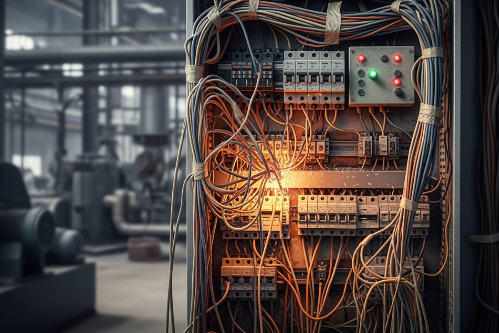
The BC government has opened a new $35 million Clean Industry Fund intake this month. That is the headline most people see.
The part many people miss is less exciting, but it decides whether a project moves forward or stalls at the estimate stage: electrical capacity.
A lot of energy-efficiency and electrification projects look great on paper. New heat pumps. Process equipment. EV charging. High-efficiency motors. Electric boilers. Refrigeration upgrades. Better controls. Lower emissions. Lower operating costs. Then the electrical review happens, and someone discovers the building or facility does not have enough service to run the new equipment safely.
That is where costs jump, timelines stretch, and rebate plans get messy.
If you own or manage a commercial building, industrial site, or even a larger residential property, this is the moment to ask a simple question: can your current electrical system actually support the upgrade you want?
In many cases, the smartest first step is an electrical panel upgrade or a full service upgrade. Done early, it can be the difference between qualifying for incentives and missing the window entirely.
Funding programs usually focus on the end goal: lower energy use, lower emissions, better efficiency. Fair enough. That is what they are designed to encourage.
But efficient equipment still needs power. Quite a lot of it, sometimes.
That creates a practical problem. Older electrical systems were built for older demand patterns. A warehouse that once needed basic lighting and a few receptacles may now want electric heating, charging infrastructure, and automated machinery. A restaurant may want induction cooking and new refrigeration. A manufacturing site may be switching away from fossil-fuel equipment to electric alternatives. A home may be adding a heat pump, EV charger, hot tub, and home automation all within a few years.
The math changes fast.
And when the math changes, the panel, service, feeders, breakers, transformers, and even utility connection can become the limiting factor.
I think this catches people off guard because “energy efficient” sounds like “uses less power.” Sometimes that is true in total operating cost terms. But a new all-electric system can still require more electrical capacity than the building had before. Efficiency does not magically cancel load requirements.
If you are considering this intake, the opportunity is obvious. Funding can reduce the upfront cost of major efficiency projects. That matters, especially for businesses that have delayed upgrades because capital budgets are tight.
But the real-world version of a funded project usually looks like this:
At that point, everything slows down.
Suddenly, the project is not just about replacing one piece of machinery. Now it may involve new distribution equipment, larger conductors, utility coordination, permits, shutdown planning, and extra labour. Sometimes even a transformer upgrade.
That does not mean the project is a bad idea. It just means the electrical side should have been checked first.
For many applicants, the most valuable money saved is not the rebate itself. It is the money saved by avoiding redesigns, rushed change orders, and installation delays after approvals are already in motion.
People often use these terms as if they mean the same thing. They do not.
A panel upgrade usually means replacing or expanding the main distribution panel or subpanels so the building can handle more circuits, modern breakers, or higher load safely. This can improve capacity inside the building, but it does not always increase the amount of power coming in from the utility.
A service upgrade is bigger. It usually involves increasing the building’s incoming electrical service capacity. That may include the meter base, service entrance conductors, disconnects, main panel, grounding, and utility-side coordination.
In plain English, a panel upgrade improves your distribution. A service upgrade increases the supply available to distribute.
Some projects need one. Many need both.
That distinction matters because a quote for new equipment can look reasonable until someone realizes the incoming service is still too small. Then the scope changes, and so does the budget.
You do not need a massive facility to run into this problem. Capacity issues show up across residential electrical, commercial electrical, and industrial electrical projects.
Here are the common troublemakers.
Office buildings, retail spaces, restaurants, and mixed-use sites often hit electrical limits when adding:
A lot of commercial buildings still run on service sizes that made sense 20 or 30 years ago. Current loads are simply different.
This is where the issue gets serious, fast.
Industrial electrical projects often involve:
An industrial electrician will usually look beyond the panel itself and examine the whole distribution chain. On a busy site, one upgrade can affect multiple circuits, protection settings, and operating procedures. This is not a place for guesswork.
The Clean Industry Fund is not aimed at a single-family homeowner in the same way, but the lesson still applies. Residential electrical systems are under more pressure than they used to be.
Common triggers include:
A house with an old 100-amp service can hit its limits surprisingly quickly once a few modern upgrades pile up.
Some properties advertise their electrical age without meaning to.
You should probably arrange an assessment if any of these sound familiar:
If you are replacing gas-fired or fuel-based equipment with electric alternatives, do not assume your existing service can absorb it.
If there is no room for additional breakers, or the panel is relying on workarounds to fit new circuits, you are already seeing the warning signs.
This is one of the clearest signals. Frequent tripping is not just annoying. It often points to overloaded circuits or a system that is operating too close to its limits.
Old panels are not automatically unsafe, but age matters. Some older equipment is harder to service, harder to expand, and harder to insure.
A single new piece of equipment might fit within your current capacity. Three upgrades done over twelve months may not.
If anyone involved in the project has said, “We need to confirm service size first,” take that seriously. It usually means there is a real risk the upgrade is not plug-and-play.
This is the part that matters most.
An electrical panel upgrade or service upgrade is not always the glamorous line item. It is often the one people try to postpone. I get why. Nobody likes paying for infrastructure they cannot show off.
But delaying it can be expensive in very ordinary ways.
If the funding intake is open now, time matters. Discovering a capacity issue late in the process can mean missing deadlines, delaying procurement, or submitting a weaker application because site readiness is unclear.
Change orders are where budgets get ugly. A project that starts as “install new efficient equipment” can become “rework electrical room, resize feeders, coordinate shutdowns, replace panel, then install equipment.” Planning the electrical upgrade first keeps those surprises under control.
There is a big difference between a planned upgrade and emergency electrical repairs after a system starts failing under new demand. Planned work is usually cleaner, safer, and less expensive than urgent repairs during operating hours.
When you upgrade the panel or service in a planned way, you can often combine it with other electrical services: new wiring, lighting, controls, backup power provisions, or future expansion allowances. Doing that in one coordinated phase is usually cheaper than reopening everything later.
Even if a funding program covers one piece of equipment today, your facility may need more electrical capacity next year. A properly sized upgrade can keep you from repeating the same problem with the next project.
A good upgrade starts with an honest assessment, not a sales pitch.
For most commercial and industrial sites, licensed electricians will usually look at:
In a larger commercial electrical or industrial electrical project, there may also be load calculations, single-line diagrams, and coordination with engineers or the utility. If transformers, substations, or high-voltage installations are involved, the scope gets more technical and more site-specific.
This is one reason it helps to work with licensed electricians who do this kind of planning regularly. You want the estimate to reflect the real job, not the wishful version of the job.
Before you spend too much time chasing quotes for new green equipment, ask these questions:
If no, start there.
If no, that is your next step.
If no, a panel upgrade may already be on the table.
If yes, build that time into the schedule now.
If yes, assess the whole picture together. It is almost always better than treating each item as a separate surprise.
If yes, replacing it proactively may save trouble later.
It is a short checklist, but it catches a lot.
Picture a small manufacturing site applying for funding to replace fuel-based process equipment with electric equipment that will cut operating emissions.
The equipment quote looks solid. The savings case looks solid too.
Then the electrical review shows the building has no spare capacity. The main service is undersized. The panel is full. The existing distribution was never designed for the added load. Now the owner needs a service upgrade, panel replacement, new feeders, permit work, and a planned shutdown.
If they discover that early, the project can still be structured properly.
If they discover it after approval deadlines, equipment ordering, and internal budget sign-off, it becomes a scramble. That scramble is where thousands disappear.
I have seen this pattern in smaller versions on residential jobs too. A homeowner plans an EV charger and heat pump, only to find the existing service cannot support both without an electrical panel upgrade. The equipment itself is not the problem. The timing is.
If you are looking at the April 2026 Clean Industry Fund, or any other efficiency-driven project, West Trust Electric can assess whether your building is electrically ready before the upgrade turns into a budget problem.
That includes service upgrades, electrical panel upgrade work, wiring changes, commercial electrical improvements, residential electrical assessments, and industrial electrical services where higher loads demand more careful planning. For larger facilities, that may involve the broader electrical picture too, including transformers, backup generator installation, and other supporting infrastructure.
The important thing is not the brand name on the truck. It is getting a real answer from licensed electricians before you commit to equipment your site cannot support.
Still, if you are in the local region and need that assessment done, this is exactly the kind of work West Trust Electric handles.
The expensive mistake is assuming an old electrical system can absorb new efficient equipment without complaint. Sometimes it can. Often it cannot.
This month’s Clean Industry Fund intake creates a real opportunity, but only for projects that are technically ready to move. If your panel is undersized, your service is maxed out, or your distribution is already stretched, that “green” upgrade may need an electrical upgrade first.
That is not bad news. It is just the part worth knowing early.
Because when you upgrade the electrical infrastructure before the funding deadline chaos begins, you are not just improving safety and capacity. You are buying options. And in projects like these, options are usually what save the money.