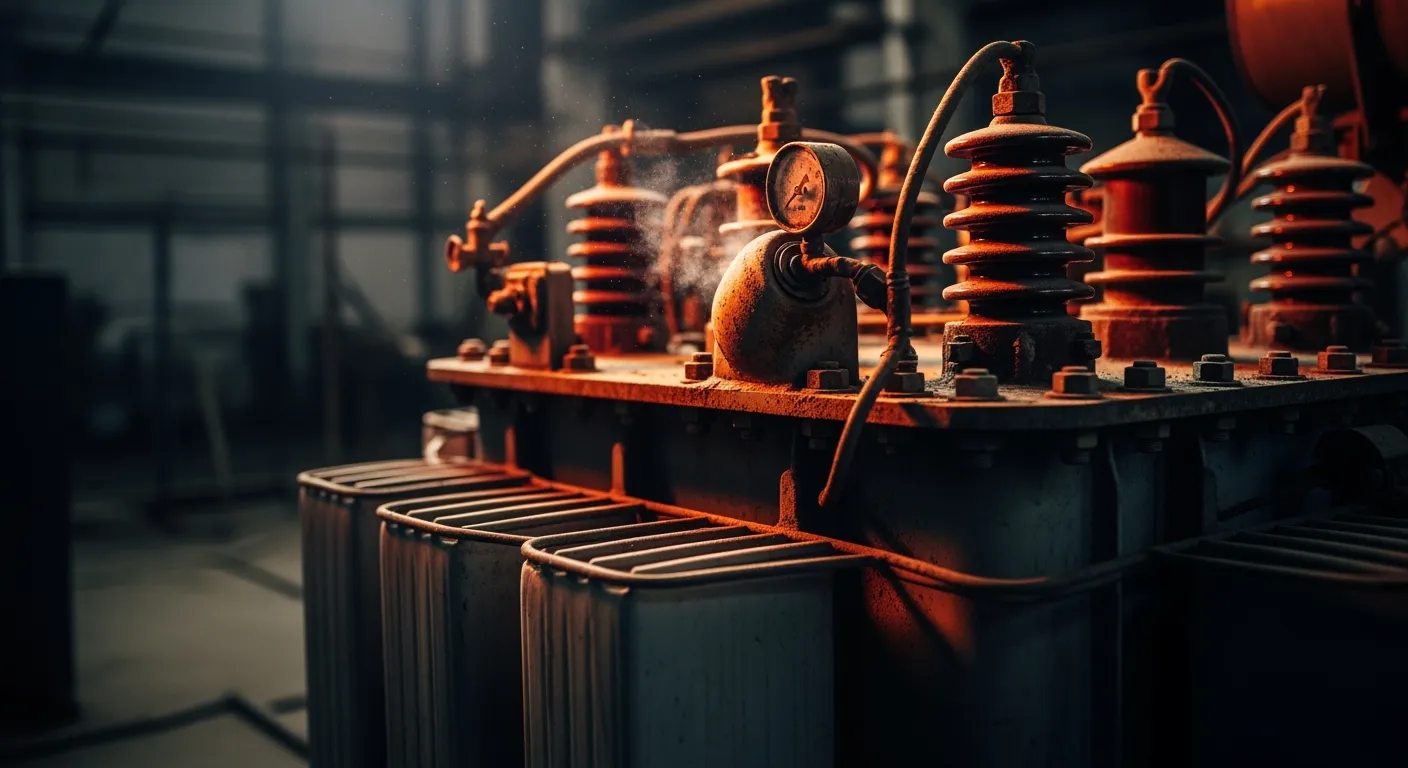
Industrial transformers do quiet, unglamorous work. They step voltage up or down, feed equipment the power it expects, and help keep production moving. Most days, nobody thinks about them. That is usually fine, until the transformer becomes the reason a line stops, a breaker trips, or a facility loses power quality.
The hard part is this: transformers do not always fail in a dramatic way. Sometimes the warning signs build slowly. A little more heat. A little more noise. Maintenance visits that get more frequent. Voltage issues that operators start calling “random.” By the time the problem feels obvious, the costs are often larger than they needed to be.
If you manage a plant, warehouse, processing site, or other industrial property, it helps to know when a repair is enough and when an upgrade makes more sense. Here’s what to watch for.
An industrial transformer has one job, but a lot depends on that job being done well. When the unit is undersized, aging, damaged, or no longer suited to the load, the trouble spreads outward. Motors run hotter. Sensitive controls misbehave. Downtime becomes more likely. Energy losses creep up.
I think this is where many facilities get stuck. If the transformer still “works,” it feels easier to leave it alone. But “still working” and “working well” are not the same thing. In industrial electrical services, that difference matters a lot.
An upgrade may mean replacing the transformer with a unit that has a higher capacity, better efficiency, updated insulation, improved cooling, or protection that fits the current system. In some facilities, it also means reviewing related gear such as switchgear, feeders, grounding, relay settings, and even the upstream connection to voltage substations.
This is one of the most common reasons for an upgrade, and one of the easiest to miss if growth happened in stages.
Maybe the building added machinery over several years. Maybe production expanded. Maybe a property that once had light industrial use now runs heavier process equipment, HVAC loads, chargers, welders, or pumps. Each addition seems manageable on its own. Together, they can push a transformer beyond the duty it was chosen for.
A transformer that regularly operates near or above its practical limit will run hotter and age faster. You may notice:
frequent overload conditions
nuisance trips or protective device activity
overheating during peak demand
voltage drop when large equipment starts
If your operations have changed since the transformer was installed, the original sizing may no longer fit reality. A load study from a qualified industrial electrician can show whether the unit has enough capacity for current demand and near-term growth.
Heat is not just a symptom. It is one of the biggest enemies of transformer life.
All transformers produce some heat during normal operation, but excessive temperature is a warning. High heat breaks down insulation, shortens service life, and raises the risk of failure. In dry-type units, you may notice the enclosure feels unusually hot or the surrounding room gets warmer than expected. In liquid-filled transformers, temperature alarms, fluid changes, or cooling problems may show up first.
Common causes include overload, poor ventilation, dirty cooling passages, deteriorated insulation, loose connections, and harmonic distortion from non-linear loads.
If temperature readings are trending upward, don’t treat that as background noise. Repeated overheating usually means the transformer is under strain or the system around it has changed. That is often the moment to ask whether repair will buy enough time, or whether an upgrade is the safer call.
Transformers make noise. That alone is not unusual. What matters is change.
A louder hum than normal, a sharp buzzing sound, rattling, or noticeable vibration can point to loose core components, winding issues, mounting problems, insulation damage, or magnetic forces increasing under load. Sometimes the cause is fairly minor. Sometimes it is the beginning of a more expensive failure.
I would not panic over every sound, but I also would not ignore a unit that suddenly sounds different. Equipment tends to tell on itself before it breaks. When operators start saying, “That transformer didn’t used to do that,” listen.
A licensed electrician or industrial electrician can inspect the unit safely, compare actual conditions to expected operating behavior, and decide whether the issue belongs in the repair column or the replacement column.
Sometimes the transformer is not the first thing people suspect. They blame the machine, the breaker, the controls, or the wiring. And to be fair, those can be the problem. But poor transformer performance often shows up as system-wide weirdness.
Watch for patterns like:
equipment restarting without a clear cause
motor performance that seems inconsistent
dimming or flickering lighting in industrial or commercial areas
control systems throwing unexplained faults
repeated issues with sensitive electronics or automation equipment
Voltage instability can come from tap setting problems, internal deterioration, load imbalance, or a transformer that is simply no longer the right match for the system. If your facility has added variable frequency drives, automation equipment, or other electronics-heavy loads, the power profile may be very different from what the original design expected.
That matters in both commercial electrical and industrial electrical environments, especially where uptime depends on stable voltage.
There is a point where repeated service calls stop being practical maintenance and start becoming a sign that the equipment is nearing the end of its useful life.
If you are replacing parts often, dealing with recurring faults, topping up fluids, tightening connections more than expected, or scheduling emergency electrical repairs around the same transformer, step back and look at the pattern. The cost of keeping an old unit alive can creep up slowly enough that nobody notices until the annual total gets uncomfortable.
Then there is the downtime problem. One repair bill is easy to measure. Lost production, delayed deliveries, and disrupted staff schedules are harder to see on paper, but they count.
An upgrade can cost more upfront, obviously. Still, there are times when continuing to repair older industrial transformers is the expensive choice disguised as the cautious choice.
Age alone does not automatically mean replacement. Some transformers run for decades with proper care. But age changes the risk profile.
Insulation weakens. Efficiency falls behind modern standards. Replacement parts get harder to find. Documentation becomes incomplete. Testing may start showing marginal results even if the unit has not failed outright. If the transformer came from an older facility design, it may also be mismatched to today’s loads and protection requirements.
This gets especially serious when the unit supports critical operations. If parts are scarce or the model is obsolete, a single failure can turn into a long outage while everyone scrambles for a solution.
In older industrial sites around Vancouver and the Lower Mainland, this issue comes up more than people expect. Buildings evolve. Electrical infrastructure often lags behind. A transformer that made sense twenty-five years ago may now be the oldest weak link in an otherwise updated system.
Good maintenance is not just visual. Electrical testing often tells the real story.
Tests such as insulation resistance, turns ratio, winding resistance, power factor testing, dissolved gas analysis for liquid-filled units, and thermal imaging can reveal trouble before failure happens. If those results show insulation deterioration, hot spots, moisture ingress, winding issues, or abnormal gas formation, you have useful information, even if the transformer still appears to be operating.
That is the moment to be honest about risk. A transformer with declining test results may continue running for a while, or it may not. The uncertainty is part of the problem. Facilities with critical loads usually do better when they plan the upgrade on their own schedule instead of waiting for the transformer to choose the date.
This one sounds obvious, but people still put it off.
Rust, cracked bushings, fluid leaks, damaged seals, contaminated insulation, and signs of moisture inside an enclosure all point to reduced reliability. Water and electricity are a bad pairing in any setting. In transformer equipment, moisture can lower insulation strength and accelerate internal damage.
Physical damage also matters after impacts, flooding, severe weather, or nearby faults. Even if the transformer powers back up, hidden damage may remain.
If a unit has been exposed to harsh conditions, ask for a proper evaluation. Surface damage is not always just cosmetic, especially in high-voltage installations.
Transformer efficiency does not get as much attention as failure risk, but it should.
Older or overloaded units can waste more energy than modern equipment. That loss shows up as heat and utility cost. In facilities with continuous operation, the long-term difference can be meaningful. If you are already planning electrical upgrades, it makes sense to compare the operating cost of the current transformer against a newer unit.
This is not the flashiest reason to upgrade, and I know it rarely drives the first conversation. Usually people act because of reliability concerns. Still, efficiency can strengthen the case, especially when the transformer runs under steady load for long hours.
A repair is often reasonable when the issue is isolated, the transformer is still appropriately sized, testing looks healthy overall, and support parts are available. An upgrade becomes more likely when several problems stack up at once: age, overload, heat, repeated faults, failed test results, or changing facility demand.
A simple way to think about it is this. Ask whether you are fixing a specific defect, or trying to extend the life of equipment that no longer fits the job.
That decision should include more than the transformer alone. A proper review may also look at feeders, grounding, protective coordination, arc flash implications, and related equipment. In some cases, what looks like a transformer problem is partly a system design problem. In others, the transformer is absolutely the bottleneck.
When an industrial electrician evaluates upgrade needs, the work often covers several areas:
Load analysis to compare actual demand with transformer rating.
Visual inspection for heat damage, corrosion, leaks, dirt, or mechanical wear.
Electrical testing to assess insulation and internal condition.
Review of power quality issues, nuisance trips, and equipment complaints.
Check of ventilation, ambient conditions, and installation details.
Planning for future capacity, not just today’s load.
That last point matters. Replacing an old transformer with the same size unit can solve today’s problem and create next year’s.
The worst time to plan a transformer upgrade is after an outage.
Emergency replacement usually means more pressure, fewer equipment options, more disruption, and a higher chance that temporary decisions become long-term compromises. If the transformer feeds critical production or tenant operations, the consequences can spread fast.
A planned upgrade gives you time to schedule shutdowns, coordinate with utilities if needed, review backup generator installation requirements, and confirm whether nearby switchgear, wiring, or protection settings also need work. It also gives you room to think about redundancy if downtime is especially costly.
That is a much calmer way to handle industrial electrical services than waiting for smoke, alarms, or a dead unit.
Call for a professional assessment if you are seeing any combination of overheating, load growth, unexplained voltage issues, rising maintenance, abnormal noise, failed test results, or visible damage. If the transformer supports critical operations, call sooner rather than later.
This is not a DIY inspection. Transformer work can involve serious shock, arc flash, and high-voltage hazards. The right person for the job is a qualified, licensed electrician with industrial experience, especially for larger facilities, high-voltage installations, and equipment tied into commercial electrical services or voltage substations.
If you are looking for an industrial electrician in Vancouver or the surrounding region, the main thing to ask is not just whether they do electrical repairs. Ask whether they routinely assess industrial transformers, load growth, power quality, and upgrade planning. Those are different skills.
Transformers usually give warnings before they fail, but the warnings are easy to normalize when a site is busy. Heat, noise, repeated repairs, unstable voltage, aging equipment, and poor test results are not random annoyances. They are clues.
If your facility has outgrown its transformer or keeps circling the same electrical problems, an upgrade may be the smarter move. It can reduce downtime risk, improve power quality, and give the rest of your system a better foundation.
And honestly, that is the real goal. Not replacing equipment for the sake of it. Just making sure the power system still fits the work you need it to do.