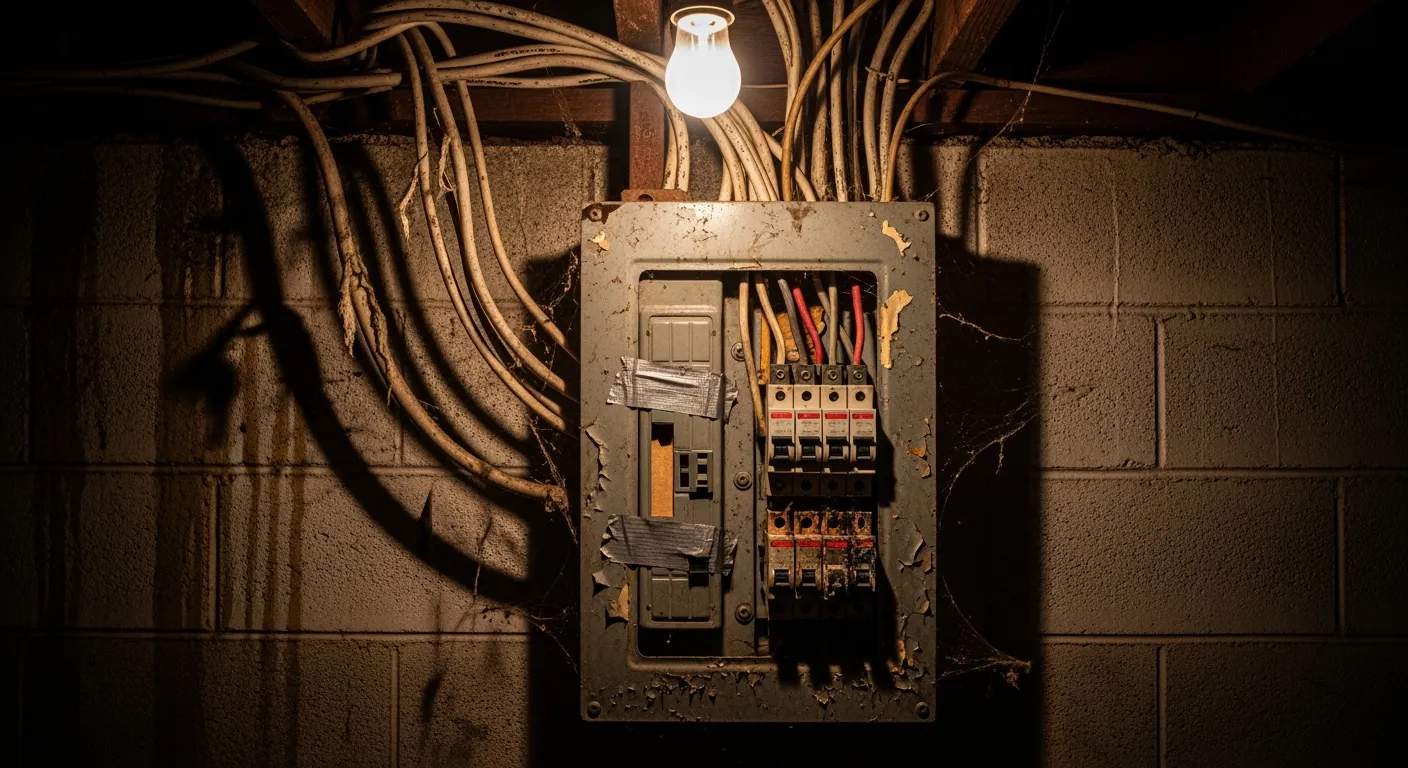
If your lights dim when the dryer starts, or a breaker trips every time two big appliances run at once, your electrical panel may be telling you something pretty clearly.
A lot of homes in Metro Vancouver were built when power demands were much lower. People had fewer kitchen appliances, no EV charger in the garage, no heat pump outside, and definitely no expectation that every room would be full of devices. A 100 amp panel could feel perfectly adequate back then. Today, it often feels tight.
That does not mean every older home automatically needs a 200 amp service. But it does mean the old rule of thumb, “if the power still works, it’s fine,” can get expensive or unsafe fast.
Here’s how to tell when a 200A panel upgrade is worth serious attention.
Your electrical panel is the control center for the home. It receives power from the utility, splits it into individual circuits, and shuts things down when there is an overload or fault.
When people talk about a 200A panel upgrade, they usually mean increasing the home’s electrical service capacity to 200 amps. In many cases that includes more than just swapping the metal box on the wall. It may also involve the meter base, service mast, grounding, conductors, and coordination with the utility.
That matters because a panel can look “new enough” and still be undersized for the house.
A 200 amp service gives you more headroom for modern loads, especially if you are adding things like:
an EV charger
a heat pump
electric baseboards or electric hot water
a secondary suite
an induction range
a hot tub
a workshop with larger tools
In Metro Vancouver, that list is common, not exotic.
A breaker that trips once in a while is not automatically a crisis. That is literally part of its job. But frequent tripping is different.
If you are resetting the same breaker again and again, or avoiding running certain appliances together because you already know what will happen, your system may be stretched past what it comfortably handles.
This often shows up in ordinary daily routines:
The toaster runs, then someone starts the microwave. Click. Darkness on part of the counter.
Kitchens are load-heavy spaces. If circuits are overloaded often, the problem may be a branch circuit issue, but it can also point to a bigger service capacity problem, especially in older homes that have seen piecemeal renovations over the years.
Dryer on. Space heater on. Bathroom fan running. Maybe somebody is making dinner too. Suddenly a breaker trips.
That kind of chain reaction tells you the house may not have enough capacity for how you actually live in it now.
This one is common with EV chargers and heat pumps. The home worked “fine” before, then a new high-demand load gets added and weaknesses show up fast. The charger may be the trigger, but the issue was brewing already.
Flickering lights are one of those symptoms people normalize for years. They should not.
If lights briefly dim when the furnace blower, microwave, dryer, or air conditioner starts, it can mean a large load is causing a voltage drop in a system that does not have enough breathing room. In some cases the issue is loose connections or a faulty circuit, not a service size problem. Either way, it deserves attention.
What you want to notice is the pattern.
A single lamp flickering could be a bad bulb or fixture. The whole house dimming when a big appliance kicks on is different. That points to a broader electrical issue.
In older Metro Vancouver homes, especially those that have had additions, basement suites, or renovated kitchens, flickering can be the visible clue that the panel and service are lagging behind the house.
A 100 amp panel is not automatically unsafe. Plenty of homes still have one and operate normally. But age, condition, and household demand matter a lot.
If your home still has a 100A service and you are adding modern electrical loads, it is worth asking whether the panel is still the right size. If you have a fuse box rather than circuit breakers, that question becomes even more urgent.
Older systems may have problems like:
limited circuit space
outdated breaker technology
wear, corrosion, or heat damage
makeshift additions from past renovations
poor labeling, which sounds minor until you need to shut power off quickly
There is also a practical issue that homeowners run into all the time. An older panel may simply have no room left for new circuits. That matters if you are planning an EV charger, heat pump, suite, hot tub, or major kitchen upgrade. Sometimes the house is not failing today, but the panel is a dead end for tomorrow.
This is probably the most common reason people start thinking seriously about a 200 amp upgrade.
Level 2 EV chargers draw a substantial amount of power. Depending on the charger and vehicle, that can be a major new electrical load added to a home that was never designed for it. In newer houses with ample capacity, it may be manageable. In many older homes across Vancouver, Burnaby, New Westminster, North Vancouver, and nearby areas, it pushes the service close to its limit.
The awkward part is that everything may still seem fine until evening, when the charger starts, the heat pump is running, someone is cooking, and the dryer is on. Then the house tells the truth.
If you are planning home charging, do not guess. A proper load calculation by a licensed electrician will show whether your current service can support it safely.
Heat pumps are a smart move for a lot of homes in the Lower Mainland. They can improve comfort and reduce dependence on fossil fuel heating. But they also change your electrical profile.
The same goes for electric baseboards, electric water heaters, electric ranges, or other changes that shift the house toward all-electric living.
This is one reason the old panel question keeps coming up. A home that used natural gas for space heating, hot water, and cooking may have had modest electrical demand. Once those systems start converting to electric, the math changes.
That does not mean every heat pump requires a 200A service. Some do not. But if your panel is already crowded or your house already shows signs of strain, a heat pump installation is the moment to look harder.
Metro Vancouver homes rarely stay frozen in their original layout. Kitchens get redone. Basements become suites. Garages become workshops. Laneway homes enter the picture. A “small” renovation often increases electrical demand more than people expect.
A finished basement might add:
more lighting
bathroom circuits
kitchen appliances
laundry equipment
baseboard heating
separate living needs and device use
Even if each addition feels reasonable on its own, the total load can outgrow a 100A service.
I see a lot of people treat the panel as background infrastructure, something to think about after the design decisions are made. It is usually smarter to check panel capacity before the renovation gets too far. It is much easier to plan for service upgrades early than to rework the job later.
This is the category where “wait and see” stops being a good strategy.
If your panel feels unusually warm, breakers are hot to the touch, you hear buzzing or crackling, or you notice a burning smell near the panel, get it checked promptly. Those symptoms do not automatically mean you need a 200A upgrade, but they do mean something is wrong.
Possible causes include loose connections, overloaded circuits, deteriorated components, arcing, or panel damage. Any of those can become a safety issue.
The same goes for visible rust, moisture intrusion, scorch marks, or breakers that will not reset properly. A panel in poor condition should be inspected by a licensed electrician, even if capacity is not the main problem.
This is a softer sign, but it matters.
If parts of the house never seem to have enough outlets, or the practical way to use a room involves a chain of power bars and extension cords, the electrical system may be behind the way you use the space. Sometimes that points to insufficient circuits rather than insufficient service size. Often it is both.
Older homes were not wired for home offices, gaming setups, multiple kitchen appliances, garage freezers, chargers in every room, and air filtration running all day. People adapt, then stop noticing the workaround.
But workarounds are not upgrades.
There are a few local reasons this issue keeps surfacing.
First, the housing stock is mixed. You have older character homes, mid-century houses, and newer infill builds all on the same block. A lot of older homes have been renovated in stages, which can leave an electrical system patched together across decades.
Second, electrification is real. More households are adding EV charging, heat pumps, induction cooking, and secondary living spaces.
Third, weather and lifestyle patterns matter. In winter, loads stack up fast. In summer, cooling loads are more common than they used to be. And year-round, people simply use more electricity than homes once anticipated.
So yes, local context matters. A 100A service that seemed perfectly workable fifteen years ago may feel cramped today.
People sometimes imagine a panel upgrade is just a box swap. Sometimes it is close to that. Often it is more involved.
A typical 200A upgrade may include inspecting the existing service, confirming load requirements, obtaining permits, coordinating utility disconnect and reconnect, replacing the panel, and updating related components to meet current code requirements.
The exact scope depends on the property.
In some homes, the panel is the main issue. In others, the service entrance equipment, grounding, or meter setup also needs updating. If the home has old or questionable wiring, that may need attention too.
The good news is that an upgrade usually gives you more than raw capacity. It can also improve organization, circuit labeling, safety, and room for future additions.
No. And honestly, saying otherwise would be lazy.
Some smaller homes with gas heating, gas hot water, and modest electrical demand may still be fine with 100A. If the system is in good condition and a load calculation supports it, there may be no reason to upgrade yet.
What matters is not the number alone. It is the combination of:
total electrical demand
size and layout of the home
present condition of the panel
future plans for the property
whether the system has enough safe capacity and circuit space
That is why a proper assessment matters more than internet guesswork.
Call a licensed electrician if any of the following are true:
Breakers trip frequently or unpredictably.
Lights dim when large appliances start.
You are adding an EV charger, heat pump, hot tub, or suite.
Your panel is older, full, damaged, or poorly labeled.
You notice buzzing, heat, corrosion, or burning smells.
You are planning a renovation and have not checked service capacity yet.
You do not need to wait for a failure. In fact, the best time to ask is before the panel becomes the bottleneck for a project you already committed to.
The better question is not “Can I get by with 100 amps a little longer?”
It is “Does my current panel match the way this home is used now, and the way it will be used next?”
For many Metro Vancouver homes, especially older ones taking on modern electric loads, the answer is no. Flickering lights, tripping breakers, and an overworked 100A panel are often early warnings, not random annoyances.
If several of those signs sound familiar, it is worth getting the system evaluated. A 200A upgrade is not about having something bigger for the sake of it. It is about making the home safer, more usable, and less fragile every time one more appliance turns on.