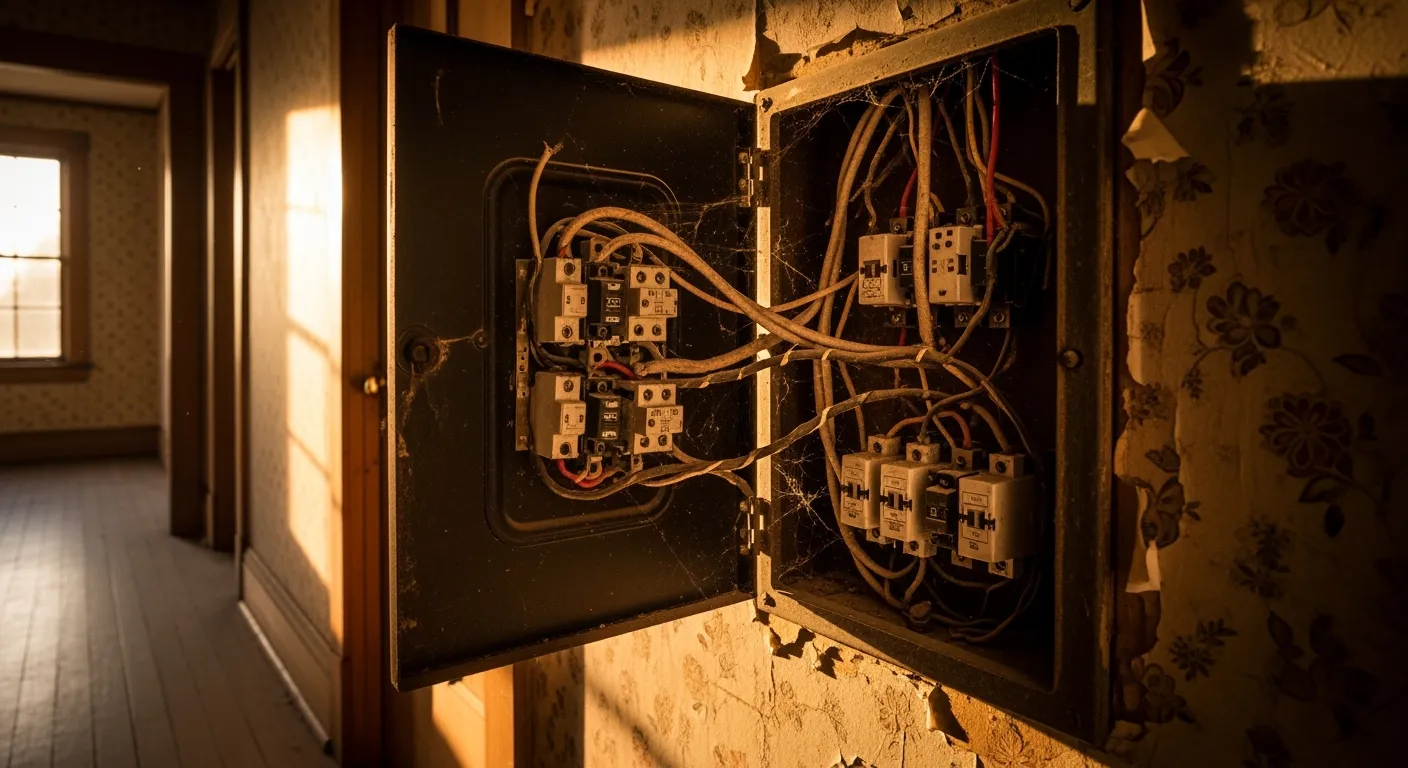
Older homes have a lot going for them. Solid lumber. Real character. Layouts that feel lived in. But the electrical system is usually not the part people fall in love with, and that is exactly why it gets ignored.
In Greater Vancouver, the Lower Mainland, and parts of the Fraser Valley, plenty of homes were built long before today’s electrical demands existed. A house from the 1950s or 1970s was not designed with EV chargers, heat pumps, induction ranges, multiple TVs, home offices, security systems, and a drawer full of charging cables in mind. Even a careful homeowner can end up asking a tired electrical system to do a lot more than it was built for.
That does not automatically mean an older house needs a full rewire. Age alone is not a diagnosis. But if your home was built before the 1980s, it is worth knowing what electricians and insurers tend to look for, especially in BC where older wiring types often raise questions.
The Vancouver area has a large stock of older detached homes, character houses, and postwar bungalows. Many have been renovated in stages over decades. That patchwork history matters.
A home might have one original section with old branch wiring, a newer kitchen wired during a renovation in the 1990s, a basement suite added later, and an upgraded service panel that hides older circuits still running through walls and ceilings. On paper, the house may look updated. In reality, the system can be a mix of old and new.
I think this is where homeowners get tripped up. A newer panel or a few modern outlets can create a false sense of security. Electrical systems are only as strong as the wiring, connections, grounding, and workmanship behind them.
Older systems also tend to show wear in boring, quiet ways. Insulation becomes brittle. Connections loosen. Past repairs may not have been done properly. Attics and walls get insulated over. Circuits get extended again and again. None of that is dramatic until one day it is.
Not all old wiring is the same. Some systems are mainly outdated. Some are more likely to cause insurance trouble. Some can remain in place if they are in good condition and properly evaluated. Here are the big ones.
Knob-and-tube wiring was commonly installed in homes built in the early part of the 20th century. It uses individual conductors run through ceramic knobs and tubes, rather than the sheathed cable most people are used to seeing today.
People often hear “knob-and-tube” and assume the house is instantly unsafe. That is too simple. The wiring itself was a standard system for its time. The problem is its age, its limitations, and what usually happens to it over many decades.
Common concerns include:
no equipment grounding conductor
insulation on the conductors breaking down with age
modifications and splices added later without proper methods
circuits being buried under attic insulation they were never meant to be covered by
limited capacity for modern household loads
In BC, insurers often pay close attention to knob-and-tube. Some will ask for proof that it has been removed, replaced, or professionally assessed. Others may still insure the home, but only under certain conditions or with deadlines for upgrades.
If you own a character home in Vancouver and are not sure whether knob-and-tube is still present, it is worth finding out before a renewal notice or home sale forces the issue.
Aluminum branch circuit wiring was used in many homes, especially in the late 1960s and 1970s. You will find it in quite a few houses around Greater Vancouver.
Again, the issue is not that aluminum is automatically bad. Utilities use aluminum conductors all the time. The concern is with older aluminum branch wiring in homes, particularly at connection points. Aluminum expands and contracts differently than copper, and it can oxidize. If devices, connectors, or installation methods are not appropriate for aluminum, connections can loosen or overheat over time.
That is why electricians pay close attention to:
terminations at switches and receptacles
splices inside junction boxes
connections in the electrical panel
signs of overheating, discoloration, or damaged insulation
Some homes with aluminum wiring do not need a complete rewire right away. In some cases, approved repair methods and connection upgrades can reduce risk. In other homes, especially where there are multiple problems or heavy future electrical demands, replacement makes more sense.
Insurers in BC frequently ask whether a home has aluminum wiring and whether remediation has been completed. That alone is a good reason not to guess.
Wiring is only part of the picture. The service equipment matters too.
An older home may still have a fuse box, a small service, or an aging panel with limited room for new circuits. Even when the wiring in the walls is acceptable, the panel may be undersized for how the home is used now.
A few things often come up in older homes:
60-amp or 100-amp services that feel stretched thin
panels with no space for added circuits
signs of corrosion or heat damage
breakers that trip often
circuits that have been doubled up or poorly labeled
a mismatch between panel upgrades and the rest of the wiring system
This is where an electrical panel upgrade sometimes becomes part of the conversation. If you are adding a suite, heat pump, EV charger, hot tub, or major kitchen renovation, the existing panel may simply not be enough.
Sometimes the clues are obvious. Sometimes they are annoyingly subtle. If your house was built before the 1980s, pay attention to patterns like these.
If breakers trip often, fuses blow, or lights flicker when appliances turn on, your system may be overloaded or have failing connections somewhere.
Anything electrical that feels warm for no clear reason deserves attention. Heat is often the first warning sign before damage becomes visible.
Two-prong receptacles usually mean there is no grounding conductor at that location. That does not automatically confirm the whole home needs rewiring, but it does tell you the system is older.
If one room never seems to have enough outlets, the problem may not be your furniture layout. It may be that the house was wired for a very different era.
These are not “wait and see” issues. Turn off the affected circuit if you can identify it, stop using the device or area, and call a licensed electrician.
A lot of rewiring conversations start not with a failure, but with a renovation. Once walls are open, older wiring issues become hard to ignore.
Many homeowners first hear about rewiring from their insurer, not their electrician.
In BC, insurers commonly ask about the age of a home’s electrical system, especially for houses built decades ago. They may want to know:
whether knob-and-tube wiring is present
whether aluminum branch wiring exists
whether the service panel has been updated
when major electrical upgrades were last completed
whether a recent inspection report is available
The response varies by insurer and by the exact condition of the property. Some may offer coverage with conditions. Some may require a professional inspection. Some may impose deadlines for repairs or replacement. Some may decline coverage until the work is done.
That can be frustrating, but it is not arbitrary. Older electrical systems create uncertainty, and insurers do not like uncertainty.
If you are buying an older home in Vancouver, it is smart to ask these questions early. If you already own one, do not wait until renewal season to figure it out.
No. And I think that is an important point to keep grounded.
A full rewire is a big project. It can be absolutely worth doing, but it is not always the only path. The right answer depends on the actual condition of the system, not just the construction year of the house.
An electrician will usually weigh a few factors:
Knob-and-tube, aluminum branch wiring, cloth-insulated conductors, and mixed-generation wiring each raise different issues.
A system with intact insulation, sound connections, proper grounding upgrades, and light usage is very different from one with overheating, amateur splices, and overloaded circuits.
A house that is staying mostly as-is may need far less work than one preparing for a suite, electric heating, EV charging, or new appliances.
If you are already opening walls for a renovation, that is often the most cost-effective time to replace old wiring.
In some homes, the best approach is targeted work. That might mean replacing only the oldest circuits, correcting unsafe connections, upgrading the panel, adding dedicated circuits, and improving grounding and protection. In others, a full rewire is cleaner, safer, and better value in the long run.
If you are not sure where your home stands, an inspection is the place to start. A good inspection should leave you with something more useful than vague worry.
Here is what usually happens.
You may be asked when the house was built, what renovations have been done, whether there are recurring electrical issues, and whether insurance has requested anything specific.
Any paperwork helps. Old permits, panel labels, renovation invoices, and past inspection reports can save time.
The electrician will look at the panel size, breaker condition, labeling, bonding and grounding, signs of heat, and general workmanship. They will also look for whether the panel has enough capacity for current and future use.
This often includes visible wiring in the basement, crawl space, attic, utility areas, or garage. The electrician may identify wiring types, past modifications, unsupported runs, open splices, or improper connectors.
This part is worth stating clearly: a standard inspection does not usually mean opening every wall in the house. Hidden conditions can exist. If more invasive investigation is needed, that is usually discussed separately.
The electrician may test receptacles, polarity, grounding, GFCI protection where required, and general circuit behavior. They may also note signs that circuits are overloaded or shared in ways that need attention.
A useful report should tell you what is present, what is unsafe, what is outdated but still functioning, and what work is recommended now versus later.
That distinction matters. Homeowners do not need scare tactics. They need priorities.
The word “rewire” sounds like the entire house gets gutted overnight. Usually, it is more planned than that.
A rewiring project often includes permits, coordination with the local authority, staged power shutoffs, opening selected wall and ceiling areas, replacing branch circuits, upgrading devices, and possibly combining the work with a panel upgrade. If the home is occupied, electricians often phase the work so basic services stay available as much as possible.
You may also need patching and painting afterward, since electrical crews handle the wiring, not the finish carpentry or drywall repair unless that is part of the scope.
This is why timing matters. If you are already planning a renovation, rewiring then can save money and reduce disruption.
Before booking an inspection, gather what you know.
Look for the year the home was built. Take a photo of the panel. Make a note of any flickering, tripping, buzzing, or warm outlets. If your insurer has asked for information, have that wording ready. If you are buying the home, pull out the inspection report and highlight anything electrical that seemed vague.
That small bit of prep often leads to a much clearer conversation.
Old wiring hides well. That is part of the problem. You can live with it for years without knowing whether it is merely dated or genuinely unsafe.
If your home in Vancouver, the Lower Mainland, or the Fraser Valley was built before the 1980s, it is worth getting clear on what is behind the walls. Knob-and-tube, aluminum wiring, and outdated panels do not always mean panic. They do mean you should stop guessing.
A professional inspection can tell you whether you need a full rewire, a targeted repair plan, an electrical panel upgrade, or simply documentation for your insurer. That is a much better place to be than waiting for a breaker to trip, a renovation to stall, or an insurance issue to land in your inbox.