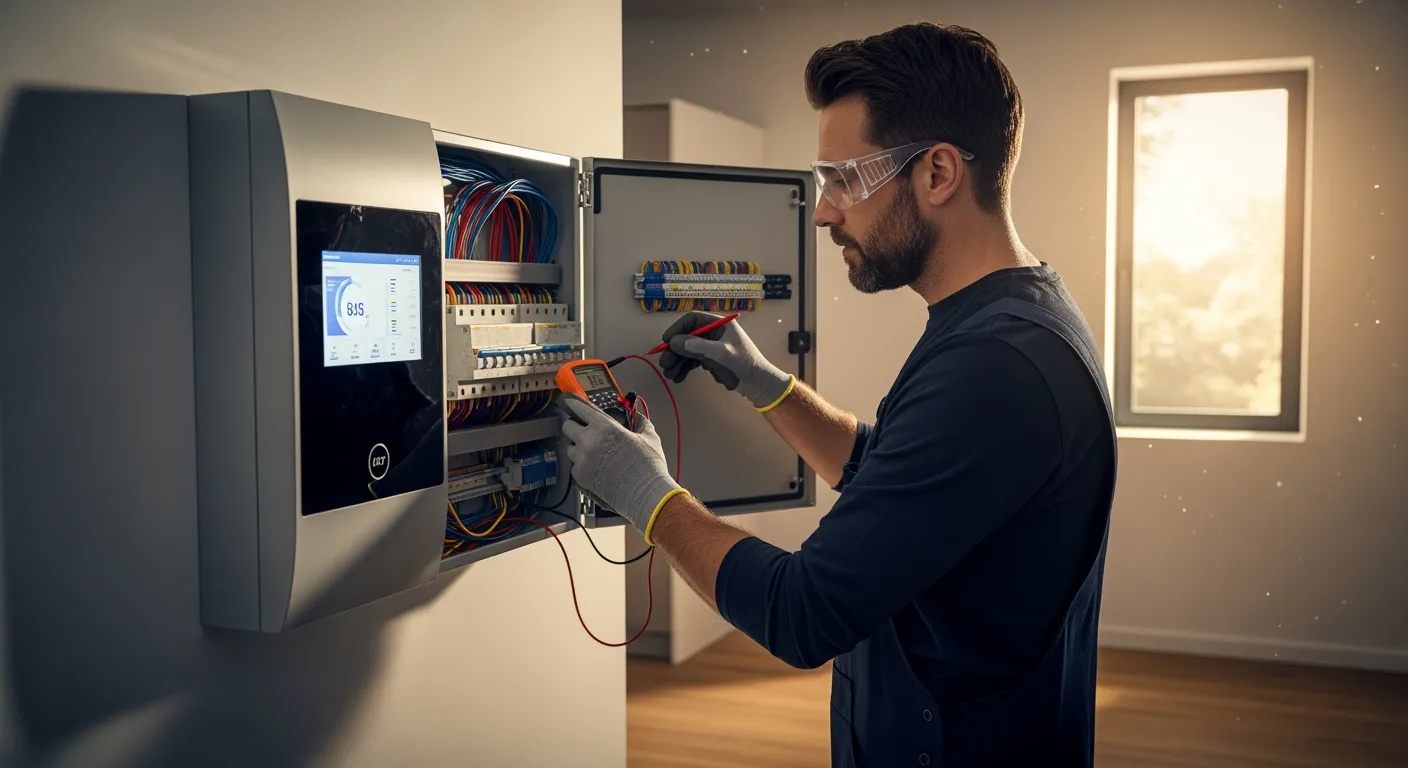
Home automation gets marketed like a collection of gadgets. A smart switch here, an app there, maybe a video doorbell and a few motion sensors. That is the fun part, sure. But the part that decides whether your system feels smooth or annoying is the wiring behind it.
Good home automation wiring is really about building a stable electrical foundation. It covers full electrical service wiring, panel capacity, lighting and controls, dedicated circuits where needed, and a setup that leaves room for the next upgrade. If that base is weak, the smart features tend to feel flaky fast.
For homeowners in Vancouver, the Lower Mainland, and the Fraser Valley, that matters more than ever. Homes are adding heat pumps, EV chargers, security devices, and more connected lighting. Businesses are doing something similar with access controls, occupancy sensors, scheduled lighting, and energy management. The devices may differ, but the rule stays the same. Smart systems need solid electrical work first.
When people hear "home automation," they often think only about Wi-Fi products. That is part of it, but not the whole job.
A proper setup can include line-voltage wiring for smart switches and dimmers, low-voltage wiring for controls and sensors, updated circuits for new loads, panel work, and integration with existing lighting, heating, security, and outdoor systems. In some projects, it also means planning for data cable runs, surge protection, and backup power options.
In a house, common automation wiring projects include:
smart lighting and dimming controls
motion or occupancy sensors
automated exterior lighting
thermostat and HVAC control wiring
doorbell, camera, and gate integration
pre-wiring for future smart devices
In commercial electrical work, the same idea shows up in a different form. Offices may want timed lighting schedules, conference room controls, access systems, or better control over after-hours power use. In industrial electrical settings, automation often focuses less on comfort and more on safety, monitoring, and process control.
So yes, "home automation" sounds residential, but the wiring mindset applies across residential electrical, commercial electrical, and industrial electrical services.
I think this is where a lot of people get disappointed. They buy smart devices expecting convenience, then end up with switches that lose connection, circuits that trip, lights that flicker, or controls that respond half the time.
Usually, the app is not the real issue. The electrical system is.
Older homes in Greater Vancouver often were not built with today’s power use in mind. A house that once handled a fridge, a stove, and a few lamps may now be expected to support a heat pump, EV charger, security cameras, under-cabinet lighting, automated blinds, and smart switches throughout. That adds up.
If the wiring is dated, undersized, poorly labeled, or patched together from years of small changes, automation can expose the weak spots. The same goes for businesses with older tenant improvements or shops that have outgrown their original electrical layout.
That is why a good electrician looks at the whole picture, not just the smart device you want installed. Load capacity, breaker space, grounding, code compliance, and compatibility all matter. Sometimes the best first step in a home automation project is not a new switch. It is an electrical panel upgrade.
A lot of automation projects begin with lighting controls and end with a harder question. Can your panel handle what you are adding?
If your existing panel is full, outdated, or already struggling, adding automation on top of it is risky. New lighting zones, heated floors, EV charging, and upgraded appliances can push an older service past its comfort zone. You might also run into issues with arc fault protection, surge protection, or simply a lack of physical space for new breakers.
A new electrical panel installation or panel replacement often makes sense when:
breakers trip regularly
the panel has no room for expansion
you are renovating several rooms at once
you are adding major loads like HVAC or EV charging
the home has older wiring that needs correction
The same applies to commercial electrical and industrial electrical jobs. A modern control system is only as dependable as the service behind it. In a retail space, that could mean cleaner lighting control and fewer nuisance issues. In a workshop or small industrial setting, it can affect equipment reliability and safety.
If you want a noticeable upgrade without turning the whole property into a science project, start with lighting.
Lighting control is one of the most useful forms of home automation because the payoff is immediate. You walk into a room and the lights respond the way you expect. Exterior lights follow a schedule. Hallway lights dim at night. A workspace has better task lighting without wasting power all day.
For homes, that might mean:
kitchen and living room dimmers
motion sensors in bathrooms, garages, or hallways
landscape and security lighting
smart control for entry, stair, and exterior areas
For businesses, it often means occupancy-based controls, timer schedules, and more efficient lighting layouts. Warehouses, offices, and storefronts all benefit from better lighting logic, especially when energy costs are rising.
The important part is that lighting upgrades should still be treated like electrical work first, smart tech second. Safe wiring, proper switch selection, and code-compliant installation matter just as much as the control features.
Renovations are where automation wiring makes the most sense. Once walls are open, you have the chance to do things cleanly instead of stacking device on top of device.
This is the moment to think past the immediate wish list. Maybe you only want smart switches today, but in two years you may want an EV charger, a heat pump, or outdoor entertainment wiring. Maybe the basement is becoming a suite, or a garage is becoming a workshop. Running the right wiring now saves time, money, and drywall later.
A full wiring plan can include service upgrades, branch circuits, lighting layout changes, control locations, appliance circuits, and rough-in for future systems. It also gives you a chance to correct older problems before they become expensive surprises.
That matters in residential electrical projects, but it matters just as much in commercial and industrial electrical work. Offices change layout. Retail spaces change occupancy needs. Light industrial sites add equipment over time. Wiring should support that kind of growth without constant patchwork.
There are some jobs where a shortcut is mostly annoying. Electrical work is not one of them.
Home automation often mixes standard wiring with newer controls, networking concerns, code requirements, and load calculations. If the installation is sloppy, you may end up with nuisance tripping, unreliable controls, hidden hazards, or inspection problems during a future sale or renovation.
Licensed electricians know how to assess the existing system before adding to it. They can identify when electrical repairs should happen first, when a panel should be replaced, and when a simple install is actually not so simple. They also know local requirements in BC, which matters for permits, safety, and insurance.
And sometimes an automation project uncovers a real issue. Loose connections, overloaded circuits, damaged wiring, or a failing breaker panel are not rare. In those cases, having access to an emergency electrician or fast emergency electrical repairs is more than a convenience. It can prevent downtime, property damage, and safety risks.
A solid automation wiring project should feel straightforward. It usually starts with an on-site review of your current system, then a conversation about what you want now and what you may want later.
From there, a good electrician should be able to explain:
whether your existing wiring and panel can support the plan
what needs to be repaired, upgraded, or added
which lighting and control options make sense for the space
what the work will cost, how long it will take, and what permits are required
That clarity matters. So do free estimates. If a contractor cannot explain the electrical side in plain language, that is usually a bad sign.
There is no shortage of electrical services in the region. The hard part is finding an electrician who treats automation as part of the full system, not as a gadget install.
If you are comparing providers, look for licensed electricians who handle wiring, lighting, electrical panel upgrade work, troubleshooting, and repairs, not just device setup. That range matters because most automation jobs touch more than one part of the electrical system. It also helps to review what residential electrical services in Vancouver should include before you commit to a project.
For businesses, the same rule applies. A contractor who understands commercial electrical or industrial electrical services will usually plan better for load growth, operating hours, safety needs, and future equipment.
That might sound strange, but it is true. The best home automation wiring does not call attention to itself. Lights come on when they should. Controls respond. Circuits stay stable. The panel has room to grow. You do not think about the system much because it simply works.
That is the goal.
If you are planning a renovation, a panel replacement, lighting improvements, or new home automation in Vancouver, Greater Vancouver, or the Fraser Valley, start with the wiring plan. Ask about service capacity. Ask about control options. Ask whether electrical repairs should happen first. Ask what future upgrades the system can support, including things like backup generator installation or additional dedicated circuits.
The smart features matter. The wiring matters more.