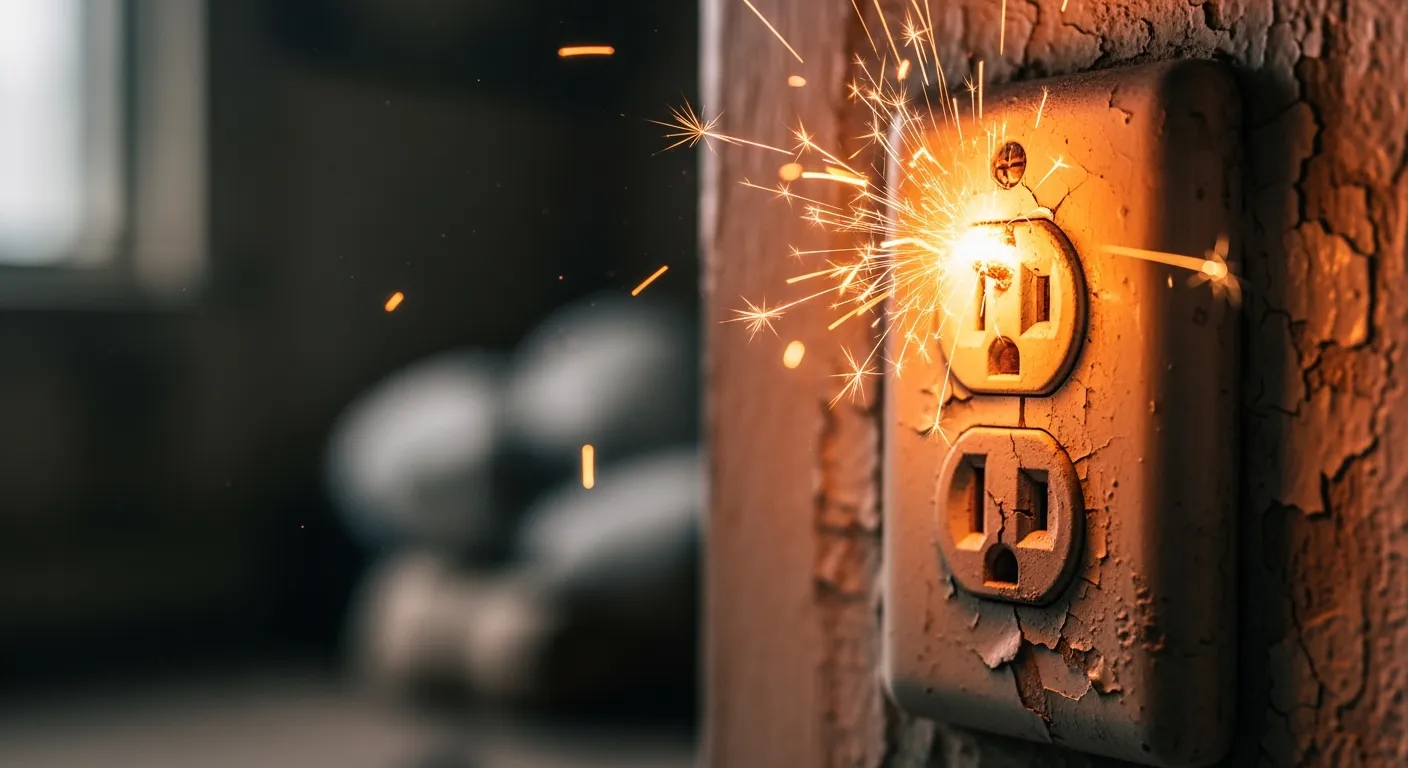
Electrical problems rarely announce themselves in a dramatic way at first. More often, they start small. A light flickers once. An outlet feels a little warm. A breaker trips, and you tell yourself it was probably the kettle and microwave running together.
Sometimes that is true. Sometimes it is not.
The problem with faulty wiring is that it can stay out of sight for a long time while getting worse behind walls, above ceilings, or inside panels. By the time the issue feels obvious, it may already be a safety risk. That matters in any property, but it matters even more in older homes across Vancouver, the Lower Mainland, and the Fraser Valley, where original wiring, past renovations, moisture exposure, or added electrical loads can all create trouble.
I do not think homeowners need to become amateur electricians. You do not need to diagnose every circuit problem yourself. But you should know the signs of faulty wiring, what they might mean, and when to call a licensed electrician before a minor issue turns into smoke, shock, or fire.
Here are five warning signs worth taking seriously.
A single flicker after a storm is one thing. Lights that dim every time the fridge starts, or ceiling fixtures that pulse for no clear reason, are different.
Flickering lights can happen for a few simple reasons. A loose bulb is common. So is a failing light switch. But when the pattern shows up in multiple rooms, or happens regularly under normal use, the cause may be deeper in the wiring.
Possible issues include:
Loose wire connections
A circuit carrying more load than it should
Voltage fluctuations
Problems inside the electrical panel
Deteriorated wiring in older parts of the home
Loose connections are the part that worries electricians most. Electricity needs a solid path. When a connection is poor, current can arc across small gaps. That creates heat. Heat is what turns a nuisance into a hazard.
In older homes in Greater Vancouver, this can show up after renovations where newer devices were tied into older wiring, or where original circuits were never designed for today's electrical use. Window AC units, portable heaters, large TVs, charging stations, and kitchen appliances all ask more from a home than people did decades ago.
Pay attention to the pattern. If one lamp flickers, try a different bulb and a different outlet. If several lights flicker when major appliances start, or if the issue happens in different parts of the house, that points away from the bulb and toward the circuit or panel.
It is also worth noting that dimming and flickering in a business space can signal similar problems. In commercial electrical settings, poor connections and overloaded circuits often show up first through lighting complaints. Homes are no different.
An outlet should not feel hot. A switch should not feel hot. Slight warmth from a device's charger can happen, but the wall plate itself should not be giving off noticeable heat.
Warmth usually means resistance is building somewhere it should not. That could be inside the outlet, at a wire connection, or in the device plugged into it. Any of those can create heat. Heat damages insulation, loosens connections further, and raises fire risk.
This is one of those signs people tend to minimize because the outlet still works. That is exactly why it gets missed.
A warm outlet may be linked to:
Loose or damaged wiring
A worn receptacle
An overloaded circuit
Poorly installed replacements
A device drawing more current than the outlet or circuit can safely handle
If the outlet is discolored, smells unusual, or has black marks, treat it as urgent. Do not keep using it to "see if it gets worse." It already has.
In some homes, two-slot outlets or older ungrounded receptacles have been replaced over the years without the underlying wiring being updated properly. That can give the appearance of a safer, newer system when the actual wiring is still outdated. In residential electrical work, surface improvements are not the same as a proper repair.
A warm dimmer switch is a little more nuanced, since dimmers naturally generate some heat. But "a little warm" and "hot enough to make you pull your hand away" are not the same thing. If you are unsure, stop using it and have it checked.
Your breaker is not being annoying. It is doing its job.
A circuit breaker trips when it detects more current than the circuit can safely handle, or when it senses a fault such as a short circuit or ground fault. Resetting it once after plugging too many things into one area is not unusual. Resetting the same breaker again and again is a sign that something is wrong.
There are a few possible explanations. The simplest is an overloaded circuit. Modern life packs a lot of demand into a few rooms, especially kitchens, bathrooms, home offices, and garages. If an older house still has limited branch circuits, daily use may push them past capacity.
But repeated trips can also point to more serious issues:
Damaged wiring
A failing breaker
A short circuit
Moisture intrusion
A panel that no longer matches the home's electrical needs
That last point matters more than many people realize. If a home has been renovated, had a suite added, switched to electric heating, or gained new appliances over time, the original panel may be undersized. In that case, the conversation may move beyond electrical repairs and into whether an electrical panel upgrade makes sense.
There is a common bad habit here: replacing the problem with a bigger breaker or using extension cords to spread the load. Please do not do either without professional guidance. A breaker is sized to protect the wire on that circuit. Oversizing it can let the wire overheat before the breaker trips, which is the opposite of safety.
If a breaker trips and immediately trips again after reset, leave it off. That often points to a more direct fault, and forcing it back on is risky.
This is the sign nobody should ignore.
If you smell something burning near an outlet, switch, panel, or appliance connection, act quickly. The smell may be sharp, fishy, acrid, or simply "electrical." People describe it in different ways, but it usually stands out from normal household smells.
Electrical burning smells can come from overheating insulation, melting plastic, arcing, or internal component failure. Sometimes there is visible evidence, such as a browned faceplate or scorch marks around an outlet. Sometimes there is not. The source may be hidden behind the wall.
What should you do?
Stop using the affected outlet, switch, or appliance.
If it is safe, shut off power to the area at the breaker.
Do not touch charred wiring or attempt to open devices yourself.
Call a licensed electrician right away. If there is active smoke, sparking, or fire, call emergency services first.
This is where an emergency electrician is the right call, not an appointment for next week.
In homes with older wiring systems, especially ones that have been modified several times over the years, burning smells can come from junctions or splices tucked out of sight. That is one reason these issues can feel so unsettling. You cannot always see the danger.
Moisture can complicate things too. In Vancouver and throughout coastal British Columbia, damp conditions and leaks around exterior walls, basements, and crawl spaces can affect wiring and devices over time. Water and electricity are an ugly combination. Corrosion increases resistance, and resistance creates heat.
For businesses and light industrial spaces, the same rule applies. Burning smells around panels, disconnects, or equipment controls need immediate attention. In industrial electrical services, heat and odor are often early clues that a connection is failing under load.
Electricity should be quiet.
A light fixture with a compatible dimmer may give off a faint hum. That can happen. But buzzing from outlets, switches, breaker panels, or wiring inside walls is not normal. Crackling is even more concerning.
These noises often point to loose connections, arcing, overloaded devices, or failing breakers. If you hear a sound and it changes when you turn a switch on or off, narrow down the location if you can do so safely, then stop using that device or circuit.
People sometimes live with this one for months because the sound comes and goes. It may be easy to brush off, especially if there is no visible damage. I would not brush it off.
Arcing makes noise because electricity is jumping where it should not. That jump creates heat and can ignite nearby material. Dry wood framing, insulation, dust, and old plastic parts do not give you much margin for error.
Panels deserve special attention here. A soft hum from some electrical equipment can be normal under certain conditions, but a loud buzz, sizzling noise, or popping sound from the panel is reason to turn away and call for professional help. Do not remove the panel cover to investigate on your own.
Older homes are not automatically unsafe. Plenty are in good shape. The problem is that age tends to pile variables on top of each other.
A house built decades ago may have:
Wiring methods that no longer suit current electrical demand
Additions or renovations completed in stages
Aging insulation around conductors
Outlets and switches worn down by years of use
Electrical panels that are full or outdated
Add local factors like moisture, finished basements, detached garages, laneway homes, suites, and increasing use of electric appliances, and the system may be under more stress than it was ever meant to handle.
That does not mean every older home needs a full rewire tomorrow. It does mean odd symptoms deserve real attention, especially if you are in Vancouver, British Columbia, or elsewhere in the Lower Mainland where older housing stock is common.
This is the practical part. You do not need to panic, but you do need to take the signs seriously.
Start with the safest immediate response:
Stop using the affected outlet, switch, fixture, or appliance.
Turn off the circuit if you can identify it safely.
Do not keep resetting breakers to force power back on.
Do not open outlets, switches, or panels unless you are qualified.
Arrange an inspection by licensed electricians, sooner rather than later.
If there is active sparking, smoke, visible charring, or a strong burning smell, this moves from "book a visit" to "call an emergency electrician now."
A professional inspection can determine whether the issue is isolated, such as one failing outlet, or part of a bigger problem involving the wiring, grounding, or service panel. Sometimes the fix is simple. Sometimes the right answer is broader electrical repairs or a panel upgrade. The point is to find out before the system gives you a harsher warning.
I understand the temptation. Replacing a switch looks easy online. Resetting a breaker feels harmless. And yes, some homeowners are comfortable with basic tasks.
But when symptoms involve heat, smell, repeated breaker trips, or suspected faulty wiring, DIY is where people can make things worse very fast. Misidentified wires, loose terminations, improper devices, and missing grounding all create risk that may stay hidden until later.
There is also a difference between getting power working again and getting it safe. A device that turns on is not proof that the wiring behind it is sound.
Most wiring problems do not begin as disasters. They begin as clues.
Flickering lights. Warm outlets. Tripping breakers. Burning smells. Buzzing sounds.
Each one is your home's way of saying the electrical system needs attention. You do not need to know the final diagnosis to respond wisely. You just need to recognize that these are not normal quirks, especially when they repeat.
If your home is older, if your electrical use has grown, or if something simply feels off, trust that instinct and get it checked. Good electrical services are not just about keeping the lights on. They are about making sure the power running through your walls is safe for the people living there.